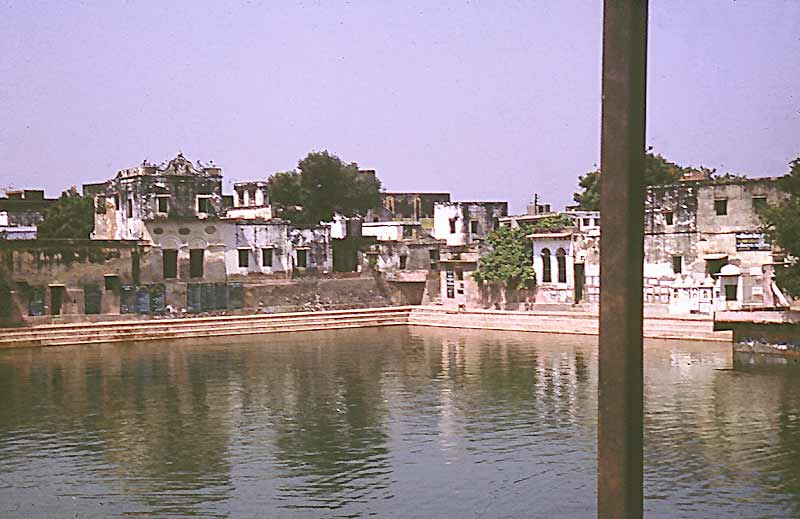
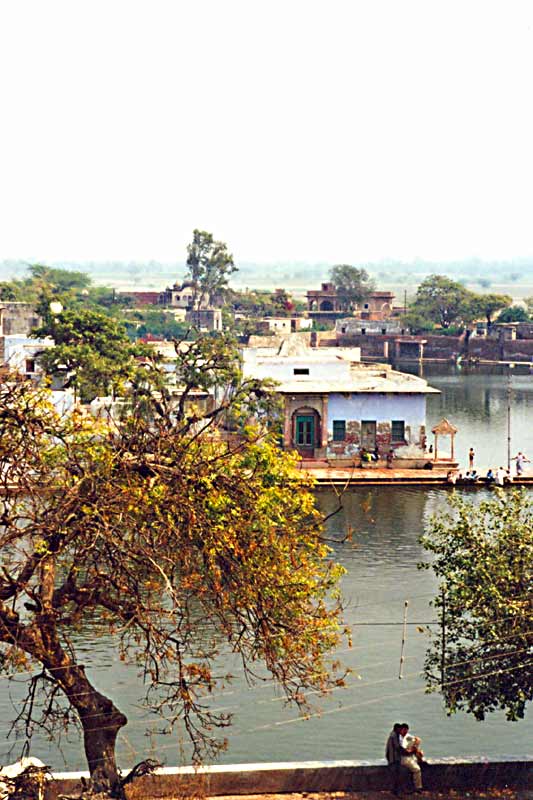
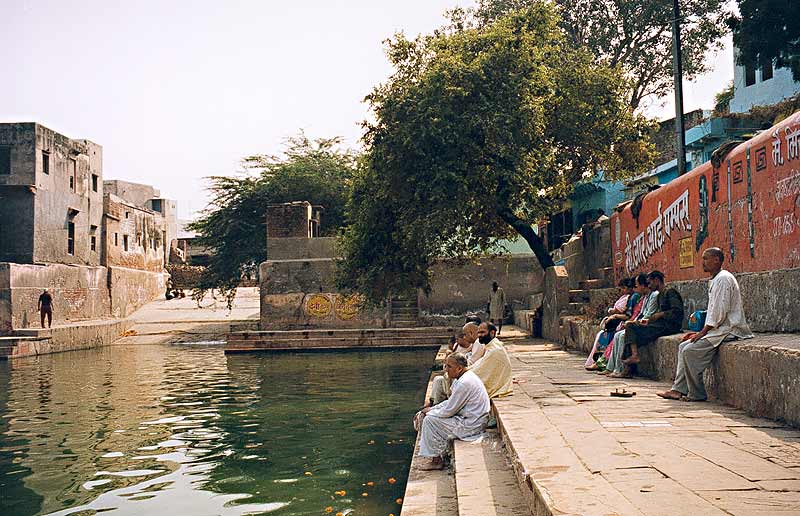
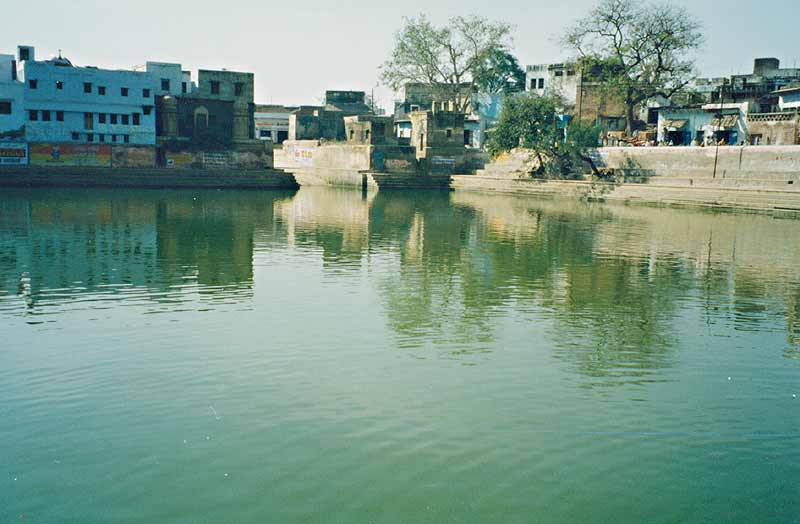
Radhakunda
is located in northwest part of Vraja (the area near Vrindavana) 100 km
south from capitol Delhi. Gaudiya-vaisnavas consider this lake of Srimati
Radharani to be the most sacred place on Earth...
(by clicking on pictures
you will get three times bigger ones in new window) |
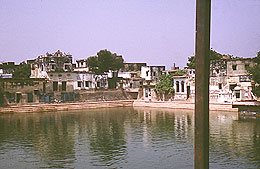 |
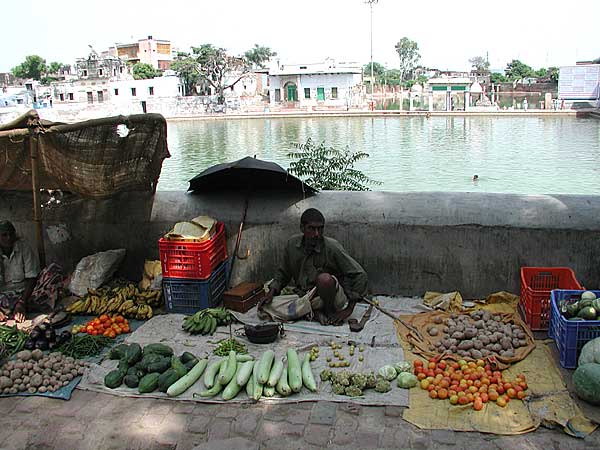
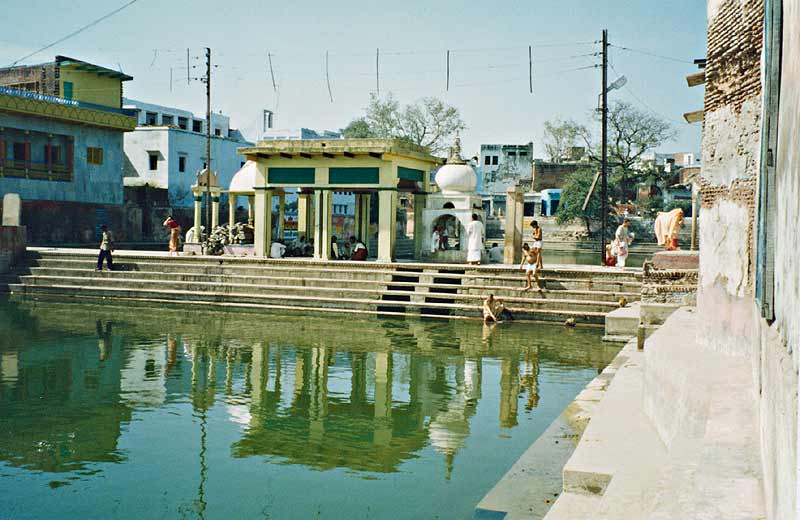
Radhakunda is situated on the
parikrama (pilgrimage) road around the Govardhana Hill. The whole Govardhana
is about 11 km long and by its shape it resemble peacock. Both ponds
- Radhakunda and Syamakunda - are like its eyes. |
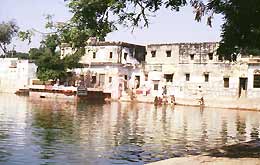 |
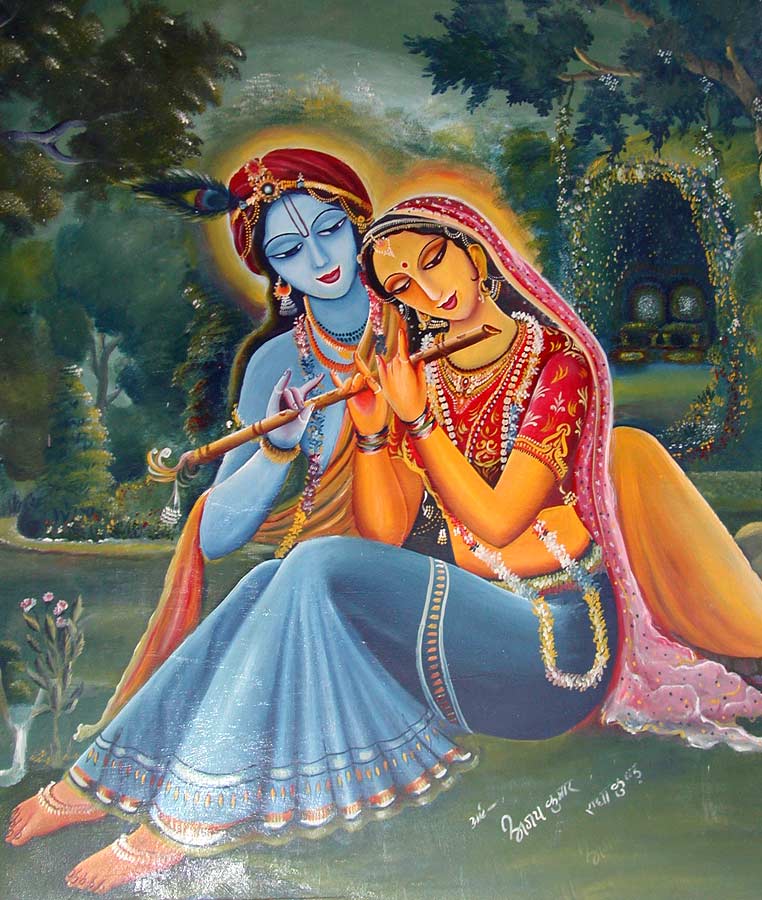
When Krishna killed Aristhasura,
a demon in the form of bull, he approached Radharani with desire to enjoy
loving pastimes. But Radharani rebuked Him, saying that He became impure
by killing a bull, the symbol of religion. She suggested that He could
get purified by taking bath in holy rivers on all sacred places... |
 |
...Krishna immediately stroked
His lotus feet in the ground and created a hole. Thereafter He called
all holy rivers. They appeared in front of Him and formed Syamakunda.
Krishna took bath in this pond and said that he become purified by taking
bath, but gopis became contaminated by siding with the demon even in form
of a bull... |
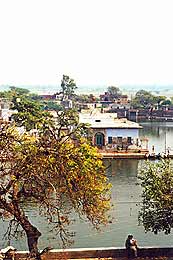 |
...Radharani and
other gopis took their bracelets, broke them into pieces and begin to
dig their pond. However, there was no water and Krishna started to laugh.
Gopis created a line to Manasa Ganga and started to bring water from there... |
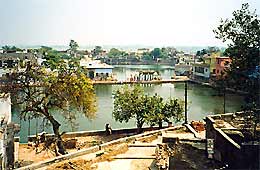 |
... The representative of all
holy rivers again appeared and this time begged Radharani if they can
reside in Her lake. Radharani agreed and holy rivers flowed from Syamakunda
thus filling Radhakunda. |
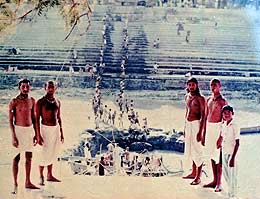 |
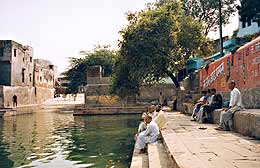
In the center of Radhakunda of
today is small area with the wall around it called Kankanakunda (or Kancankunda).
It is the area of the original pond created by gopis with their bracelets. |
 |
Radhakunda appeared at 12-th midnight
on Bahulastami (the eight day of waning moon in the month of Karttika). |
 |
In the autumn (October/November) at the appearance day of Radhakunda
many thousands of people gather...
|
 |
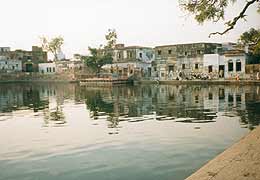
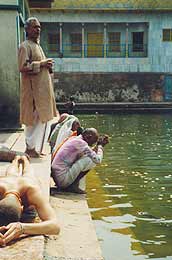
...and wait for the midnight. Then they take bath in Radhakunda. It
is really ecstatic and exiting event with ghee lamps shining on darkened
waters of Radhakunda.
|
 |
Both lakes were long forgotten until the time of Lord Caitanya, 500
years ago.
|
 |
Sri Caitanya Mahaprabhu ordered Rupa, Sanatana and other Goswamis to
excavate places of Krishna's pastimes in Vraja, but He has rediscovered
Radhakunda Personally (1514), as documented in Sri Caitanya-caritamrita.
When Lord Caitanya came there, Radhakunda and Syamakunda were just small
lakes few meters wide among forests and fields.
|
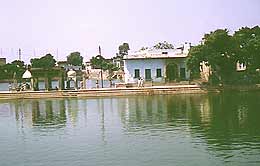 |
Raghunatha dasa Goswami came to Radhakunda few years after that. He
began the reconstruction of sacred lakes around 1554.
Long after Mahaprabhu's departure from this world, Raghunatha dasa
Goswami wanted to restore the whole area of Radhakunda, understanding
that in the future many pilgrims will want to see this holy place...
|
 |
...At that time a wealthy merchant
Sampanna went to Badarikasram, high in Himalayas, to take darsan of the
local Deity. Krishna appeared to him in a dream and told him to go to
Raghunatha dasa Goswami and help him retrieve the Radhakunda. Sampanna
did as Krishna told him and reconstruction could start. |
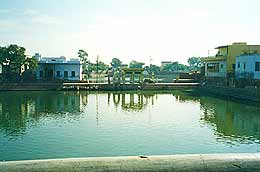 |
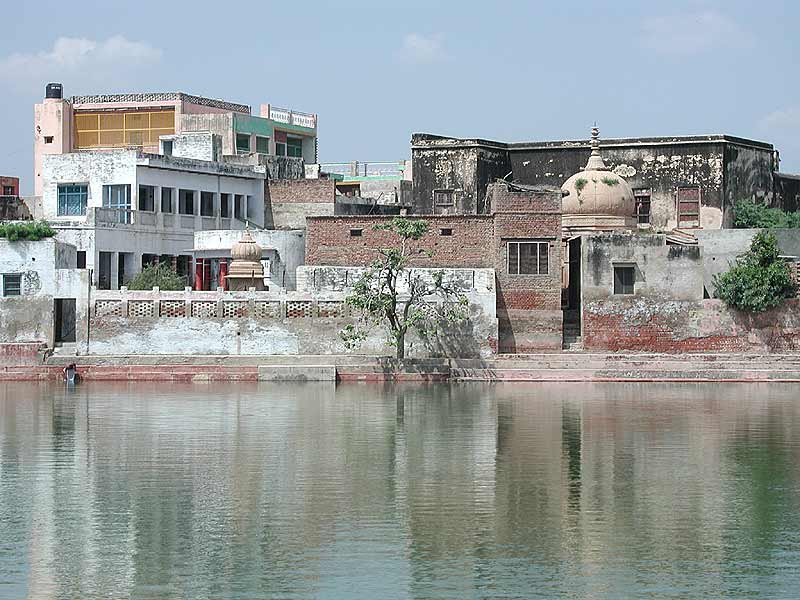
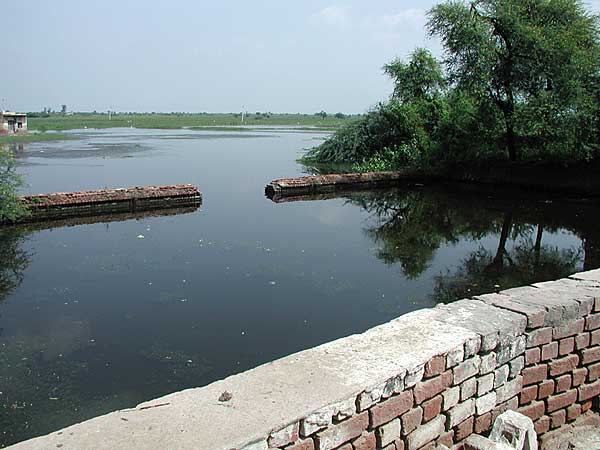
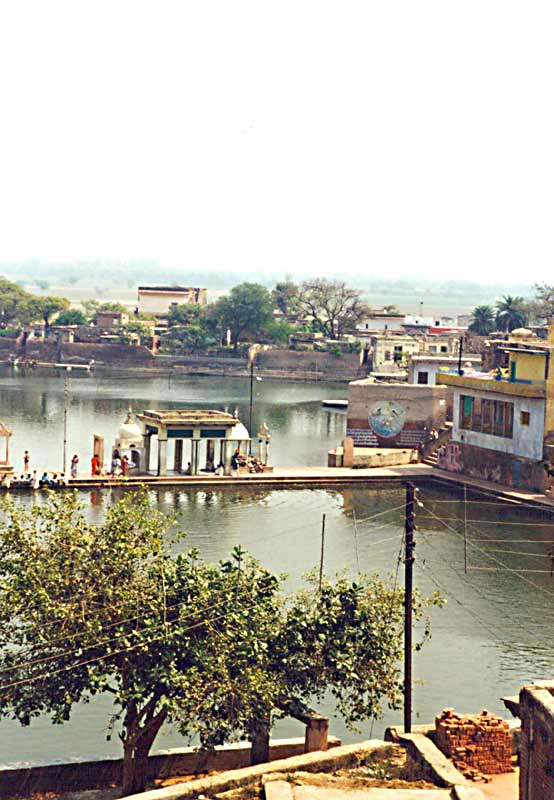
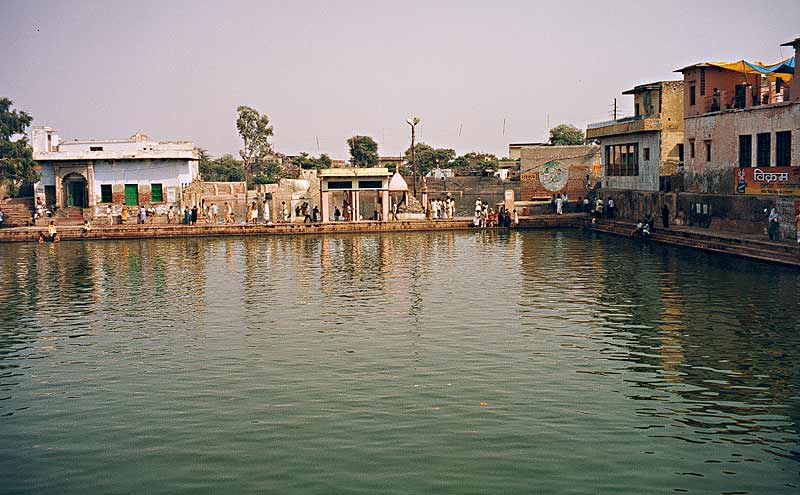
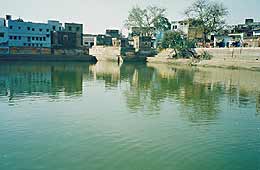
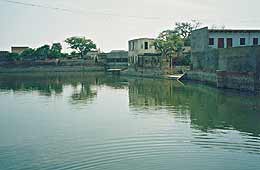
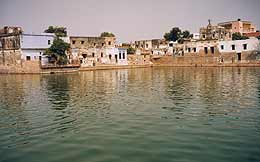
With his financial help Radhakunda
was completed first (the closer lake on the picture) and thereafter the
work started on Syamakunda (further away). |
 |
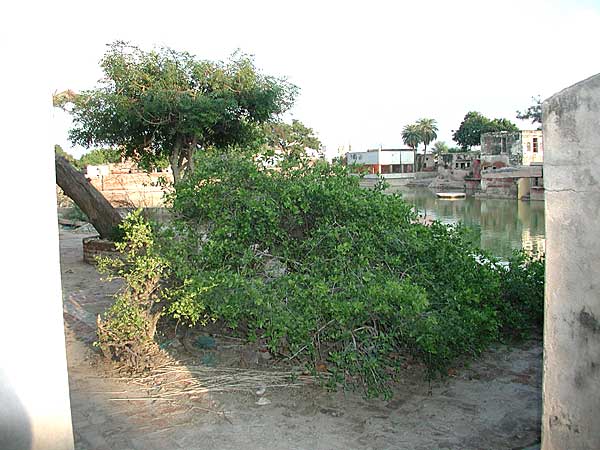
One day Maharaja Yudhisthira appeared
in the dream to Raghunatha dasa Goswami and asked him not to cut the trees
on the banks of Syamakunda, since he and his brothers are in the form
of trees performing their bhajan (worship). Raghunatha of course didn't
cut the trees and in this way Syamakunda got its irregular shape. |
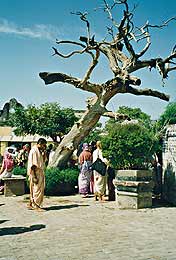 |
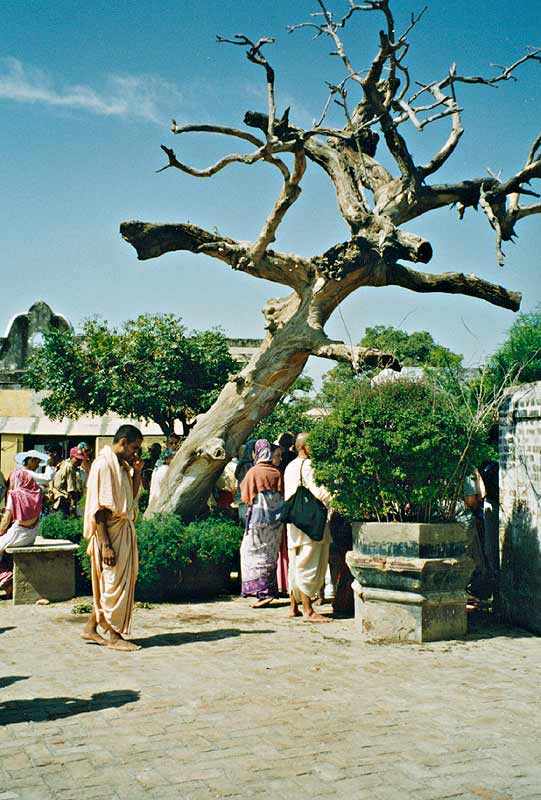
Panca-pandava.
Local people say that Pandavas already left and only death trees mark
the place of their former meditation. |
 |
1. Radha-Krishna
Purana Mandira
2. Jhulana sthali
3. Gopala Manipur Mandira
4. Radha-Shyamasundar Mandira
5. Radha-Gopinath Mandira
6. Ma Jahnava Baithak
7. Ananga Manjari kunja
8. Raghunatha das Goswami Samadhi
9. Govinda Ghata
10. Radharaman Mandira
11. Radha-Govinda Mandira
12. Jihva Mandir (tongue of Govardhan)
13. Gopala Bhatta Goswami Bhajan Kutir
14. Three Goswami Samadhi
15. Raghunatha dasa Goswami Bhajan Kutir
16. Vishvanatha Cakravarti Bhajan Kutir
17. Pilu tree
18. Manasa-pavana Ghata
19. Krishnadasa Kaviraja Bhajan Kutir
20. Bhaktivinoda Thakura Bhajan Kutir |
21. Jagannatha Mandira
22. Lalita Kund
23. Jiva Goswami Bhajan Kutir
24. Jiva Goswami Ghata
25. Lalita-Bihari Mandir
26. Manipur Maharaja Mandira
27. Radha-Vinoda Mandira
28. Madhavendra Puri Baithak
29. Gopi-kupa
30. Ashta-sakhi Mandira
31. Nitai-Gauranga Sitanath Mandira
32. Radha-Madhava Mandira
33. Caitanya Mahaprabhu Baithak
34. Pasha-khela Ghata
35. Radha-Madana-mohana Mandira
36. Lotus Footprints
37. Sangam
38. Giriraja Maharaja
39. Mahaprabhu Mandira
40. Radha-Gopinatha Mandira
41. Nityananda Prabhu Baithak
|
 |
1. Radha-Krisna Purana Mandir
Near the Kundeswara Mahadeva Temple there is small temple of a pyramid
shape. Raghunatha dasa Goswami rediscovered local Radha Krishna Deities
during the excavation of Radhakunda. |
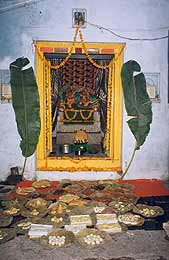 |
It is the oldest temple in the area and the Deities are said to be
predominant Deities of Radhakunda. In the courtyard of the temple there
is a banyan and neem tree, interlocked to each other. Local people worship
it as Radha and Krishna.
|
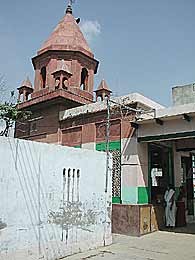 |
In Radhakunda area we can find
also Gaudiya Math Temple founded by Bhaktisiddhanta Sarasvati... |
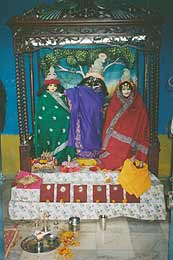 |
...Deities on the altar are Sri Sri Vinodbihari and Sri Caitanya Mahaprabhu.
|
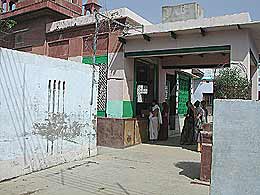 |
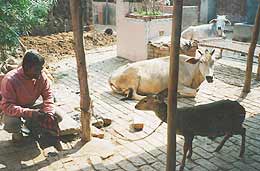
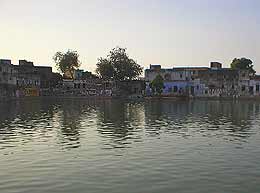
Pilgrims performing parikrama
offer their respects. |
 |
|
 |
2.
Jhulana-sthali
There is a stone structure near the bank under banyan tree shaped like
an upside-down "U" mark where Radha and Krsna enjoy Their swing
pastimes (jhulana). |
 |
3. Sri Gopal Manipur Mandir
Gopal Deity was originally being worshiped in the house of brahmana.
About one hundred years ago. The king of Manipura had a dream in which
the Deity of Gopala appeared and ordered the king to built a temple
for Him at such a place that He could gaze at Radhakunda as well as
give darsana to Surya, sun-god. The king built a nice temple for Lord
Gopala located at the exact spot where the first rays of the rising
sun appear at Radhakunda. The temple is presently in care of ISKCON
devotees.
|
 |
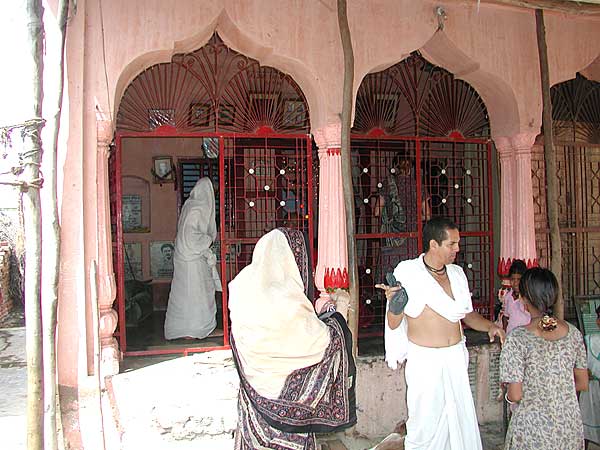
5. Radha Gopinath Temple is situated directly on the banks of
Radhakunda.
|
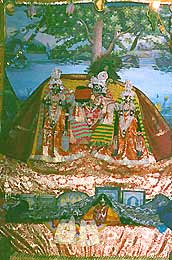 |
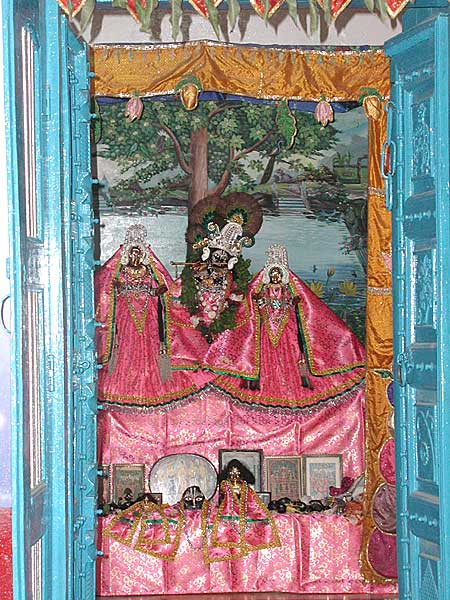
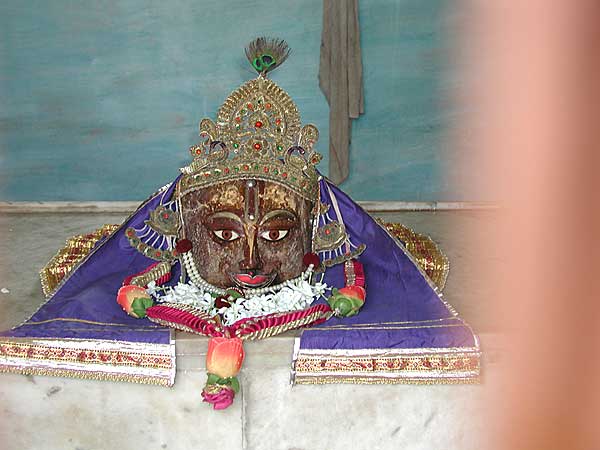
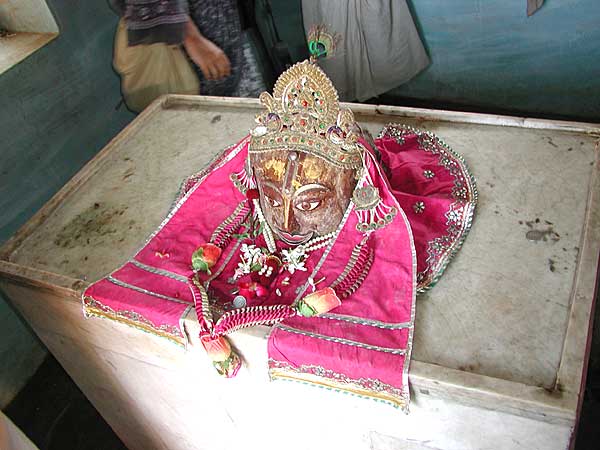
On the altar Sri Gopinath is in
the center and Ananga Manjari, younger sister of Srimati Radharani, is
on His right. |
 |
Temple
room is directly next to hall of Raghunatha's samadhi. Big feast on the
occasion of his departure is being held every year. |
 |
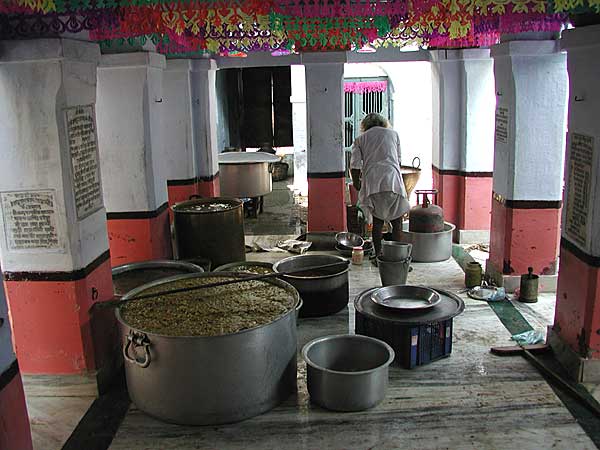
The
hall during this time becomes part of kitchen... |
 |
...with
huge pots of subji. |
 |
Temple
entrance from Radhakunda's bank. |
 |
6. Jahnava Mata baithak
Jahnava Mata, the consort of Lord Nityananda visited Radhakunda around
1582 to console Raghunatha dasa Goswami who felt great separation from
Radha and Krishna.
"Baithak" is a favorite spot of certain devotee who used
to sit there.
|
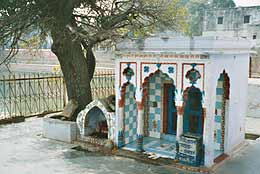 |
Ma Jahnava, while sitting here had a wonderful vision of Lord Gopinath
standing under tamala tree playing His flute. That is why the Gopinath
Deity was installed just next to her baithak.
|
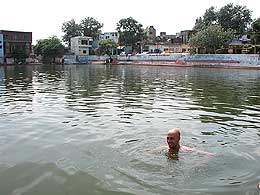 |
Near
her sitting place there are some steps leading down to the water. This
place was known as Jahnava-ghat or private bathing place of Ma Jahnava. |
 |
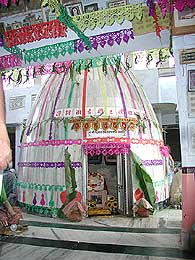
7.
Ananga Manjari kunja
The very spot where Jahnava Mata sat is the place where in aprakat-lila,
a footbridge made of pure crystal extends out into the middle of Radhakunda,
where the kunja (grove) of Anaga Manjari is situated. This kunja appears
like a large lotus flower floating in the middle of Radhakunda. Ma Jahnava
is of course no other than Anaga Manjari, the younger sister of Srimati
Radharani. |
 |
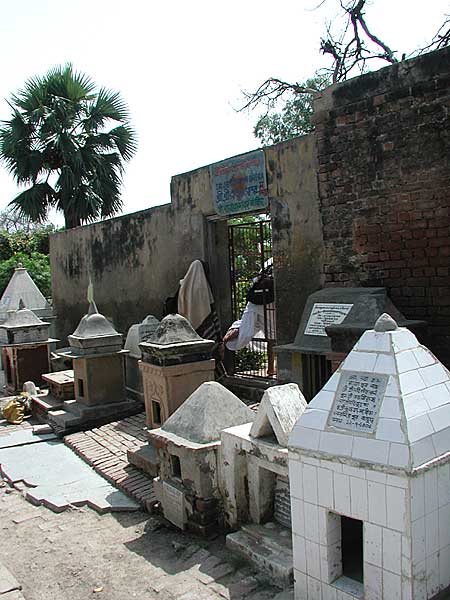
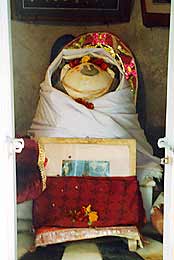
8. Samadhi of Srila Raghunatha dasa Goswami
Raghunatha dasa Goswami was born in Bengal in 1494. Although he came
from a very wealthy family, he had absolutely no interest in material
affairs. On a number of occasions, much to the consternation of his
loving parents, Raghunatha tried to run away from home and join Lord
Caitanya at Jagannath Puri. At Jagannath Puri, Lord Caitanya placed
Raghunatha under a care of Svarupa Damodara Goswami, Lord's principle
secretary.
|
 |
Raghunatha dasa was the embodiment
of renunciation and ate only to keep his soul and body together. His strict
regulative principles were exactly like lines etched in stone, as such
lines can never be erased. Lord Caitanya presented Raghunatha with His
own Govardhana-sila to worship as well as gunja-mala, sacred to Radharani.
Rupa and Sanatan, who took care about Raghunatha in Vrindavan, took it
as a sign that Raghunatha should take shelter of Govardhan Hill and reside
on the banks of Radhakunda. Raghunatha spent the rest of his life at Radhakunda.
After 40 years of bhajana, in 1583 due to intense feeling of separation
from Radha and Krisna passed away to join his Lord in spiritual world. |
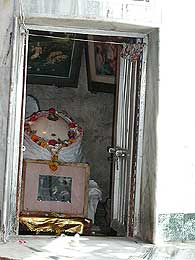 |
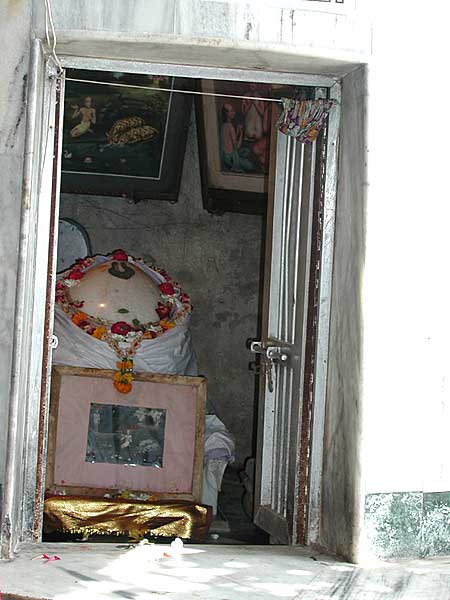
In the temple of Radha-Gopinath the ashes of Raghunatha dasa Goswami
are entombed. Jiva Goswami personally performed last rites and placed
ashes in the samadhi. It is said that some parts of his ashes were placed
in different places because of fear of repressive Mogul rule, to prevent
desecration.
Behind the samadhi is a small movable stone. Under this stone is caranamrita
of samadhi-murti of Raghunatha dasa Goswami.
|
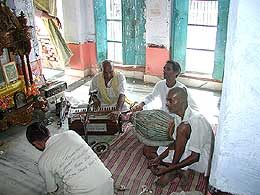 |
24 hours kirtan (singing of mantras and songs for the pleasure of Radha
and Krishna) already continues for many years.
|
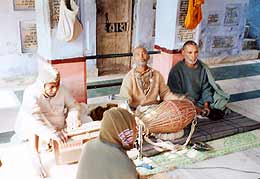 |
...kirtan started around 1960
and continues until today. |
 |
9. Govinda-ghat
Sanatan Goswami once expressed his doubts about a verse by Rupa
Goswami where he had compared the braid in Her hairs to a serpent's
black hood. At noon he came to this ghat and saw some girls playing
under nearby tree. Sanatan suddenly saw a black snake approaching one
of the girls from behind and shouted to the girl to warn her...
|
 |
...Upon hearing Sanatana's warning, the girl tuned around, smiled at
Sanatana and disappeared. Sanatan with tears in his eyes, immediately
run to Rupa Goswami and congratulated him that the poetic metaphor used
in his verse was absolutely correct.
|
 |
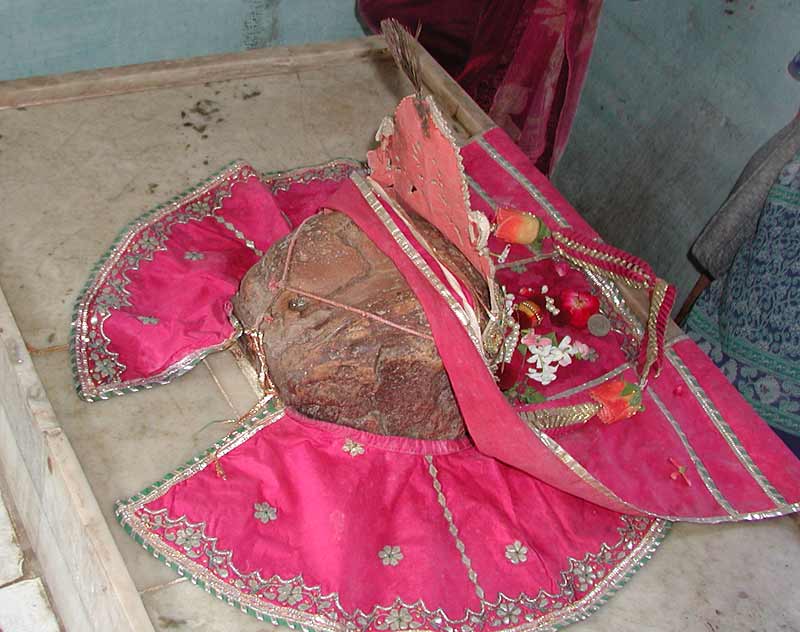
12. Jihva Mandir
Raghunatha dasa Goswami considered the water from Radhakunda to
be too sacred for his bodily use and wanted to have a well made....
|
 |
...One of the workers stroked a stone, which started to bleed. Raghunatha
immediately stopped him and in the night Krishna appeared to him...
|
 |
...He told him that this stone is a tongue of the Govardhana Hill. He
wanted him to install and worship the sacred sila in the temple...
|
 |
...On the backside of the sila we can still see the markings
of workers tools...
|
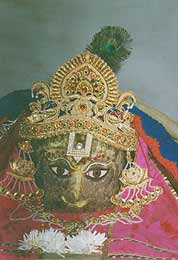 |
...It is said that if one walks around this Govardhana-sila 10 times,
he receives the same benefit as if he has circumambulated the whole
Govardhana Hill (govardhana-parikrama). This possibility is usually
used in time of physical indisposition.
|
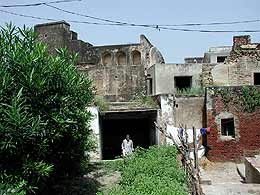 |
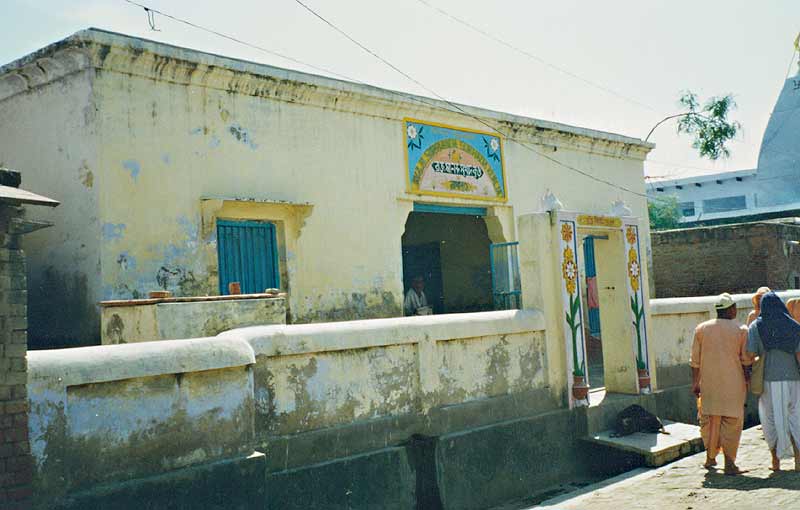
Jihva (tongue) Temple is near the Radha-Govinda temple on Radhakunda.
|
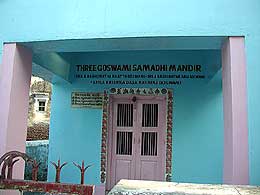 |
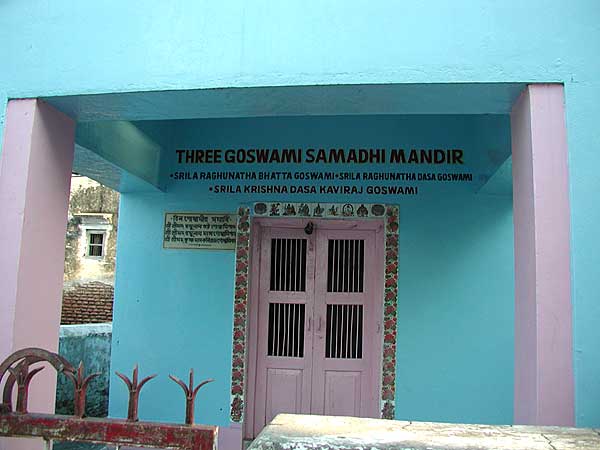
14. Teen Goswami Samadhi
Teen Goswami Samadhi (samadhis of three Goswamis) is about 20 meters
from Radha Govinda Temple. Raghunatha Bhatta Goswami (1563), Krisnadasa
Kaviraja Goswami (1583) and Raghunatha dasa Goswami (1588) left this
word on the same day but in different year. Their samadhis are just
near each other.
|
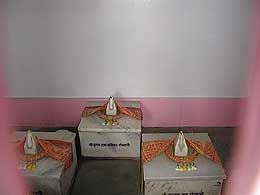 |
Samadhis from left to right Raghunatha Bhatta Goswami, Krishnadasa
Kaviraja Goswami and Raghunatha dasa Goswami.
According to some sources those are puspa-samadhis and it is
quite possible that the same portions of ashes of these saintly devotees
were buried at different places.
|
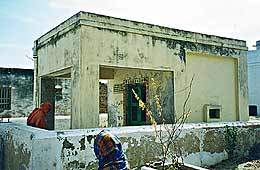 |
This is how it looked like few years ago.
|
 |
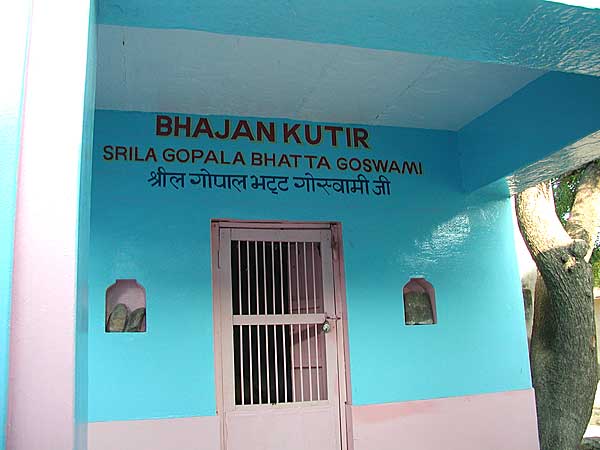
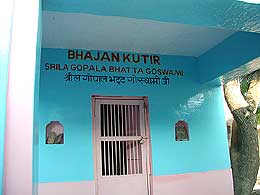
13. Bhajan-kutir of Gopal Bhatta Goswami is few steps from there.
Gopal Bhatta established Radharamana temple in Vrindavana and spent
much of his time at Radhakunda with Raghunatha dasa Goswami and Krisnadasa
Kaviraja Goswami.
Bhajan-kutir is usually a small cottage or living place (kutir) where
sages and devotees used to live and perform their bhajan (worship by
singing, meditating, reciting mantras, reading, writing or performing
ceremonies).
|
 |
It
is interesting that Gopal Bhatta Goswami requested Krisnadasa Kaviraja
not to mention his name in Sri Caitanya-caritamrita. Trinad-api-sunicena... |
 |
15.
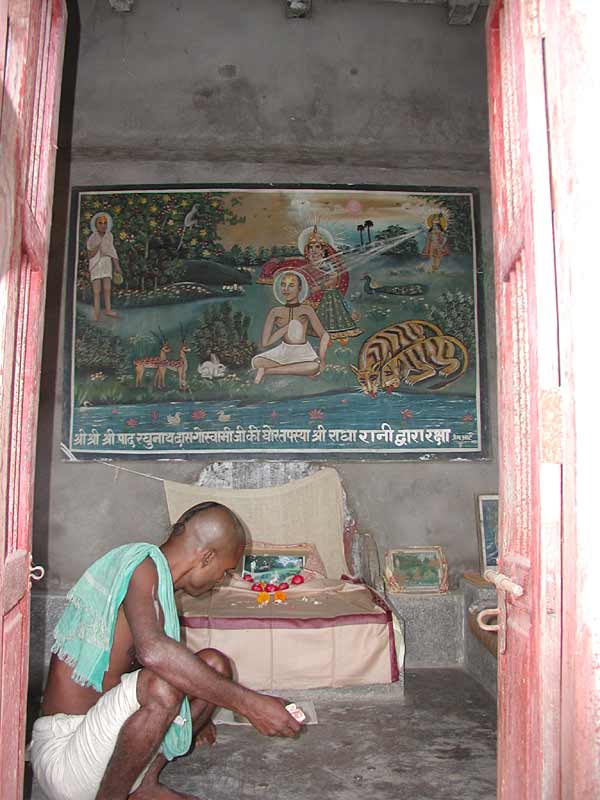
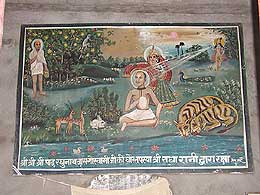
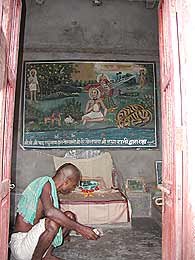
Bhajan kutir of Srila Raghunatha dasa Goswami. Raghunatha dasa Goswami
is said to perform bhajan here at Radhakunda for almost 40 years. In the
first few years, he lived out in the open. Once when Raghunatha was sitting
on the bank of Syamakunda performing his bhajana, two tigers appeared
out of the jungle and came to drink water from the kunda. Raghunatha was
so absorbed that he did not notice the tigers nearby. Lord Krsna suddenly
appeared and stood at distance, just make sure no harm came to him... |
 |
...Another day he was chanting holy name and as day went by the sunshine
became unbearably hot. Raghunatha started perspiring and from his eyes
torrents of tears were flowing. Srimati Radharani could not bear this
scene. She personally came there and stood behind holding Her veil shielding
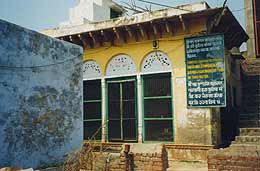
Raghunatha from the sun. It so happened that Sanatana Goswami saw both
those scenes from a distance and became furious with Raghunatha for
his taking service from Radharani and Krisna. "You should serve
Them and not because of your negligence force Them to serve you!"
thus getting Raghunatha to built his bhajan-kutir...
|
 |
...Every day Raghunatha dasa Goswami used to talk for three hours about
ecstatic pastimes of Lord Caitanya on the banks of Syamakunda surrounded
by all the devotees. Krisnadasa Kaviraja was also there listening in
rapt attention and everything recorded in Antya-lila of Caitanya-caritamrta.
19. Bhajan-kutir of Krishnadasa Kaviraja Goswami
|
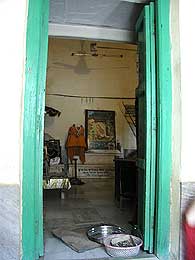 |
Near Syamakunda in proximity of Raghunatha's bhajan-kutir is also bhajan-kutir
of Krishnadasa Kaviraja Goswami...
|
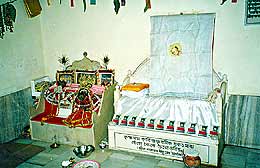 |
... where he wrote some parts of Caitanya-caritamrita.
|
 |
16. Bhajan-kutir of Visvanatha Cakravarti Thakura is right left
to Raghunatha's kutir closer to Syamakunda above Manasa-pavana-ghat.
Vishvanatha Cakravarti was born in Bengal in 1638 and spent large part
of his life at Radhakunda.
|
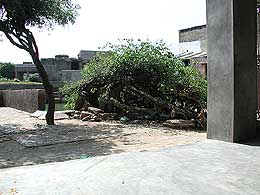 |
17. Pilu tree, growing nearby was in his previous life brahmana
from Varanasi...
|
 |
...Desiring service to Radha and Krsna he was born here as this pilu
tree on the bank of Syamakunda. Vishvanatha used to discuss with him
about Krisna's pastimes and brahmana in the form of tree told him many
things that took place here during Krisna's pastimes 5000 years ago.
|
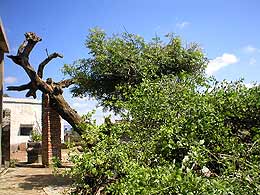 |
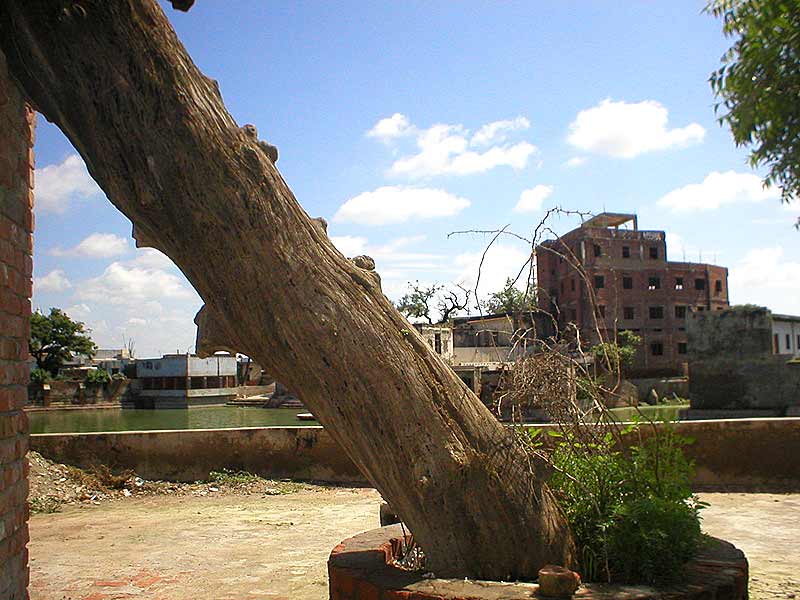
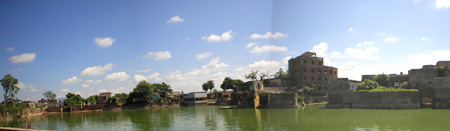
Nearby trunk of dried tree is said to be Bhimasen. Now he went to aprakat
(unrevealed to our eyes) lila... |
 |
...But on his place new sprouts are already growing. |
 |
|
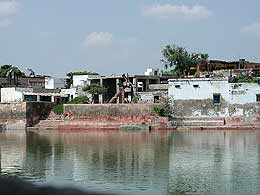
18. Beautiful sight of Syamakunda from Manasa
Pavana Ghat.
|
 |
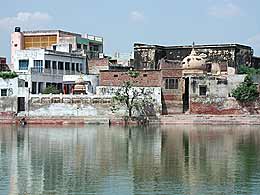
In
the corner of Syamakunda there is a place known as Manasa Pavana Ghat.
There Radharani and Her friends took bath every noon... |
 |
...and
just next to it is Panca Pandava Ghat. |
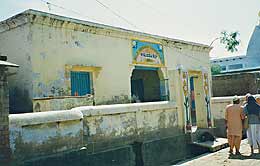 |
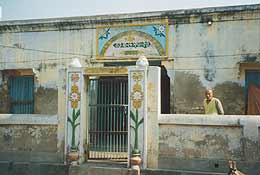
The house of Bhaktivinoda Thakura
was built in the beginning of the century. We can find it on the way
further away from Syamakunda. |
 |
Bhaktivinoda Thakura during his
life (1838-1914) used to stay on different places including Radhakunda.
Together with his son Bhaktisiddhanta Sarasvati they preached Krishna
consciousness and tried to disclose pretenders. |
 |
Puspa-samadhi of Bhaktivinoda
Thakura and his son Bhaktisiddhanta Sarasvati (on the left). "Puspa"
means "flowers" and after departure of saints the flowers from
their actual samadhi (tomb, where their bodily remains are buried) are
brought to different places, which were connected with their lives. The
flowers are buried there and in this way a puspa-samadhi is made. |
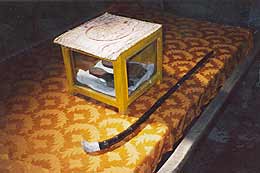 |
Bhaktisiddhanta Sarasvati used to come there in Karttika (October/November).
We can see his personal belongings - wooden shoes, cane, chair and table.
|
 |
Bhaktivinoda Thakura wrote in his Gita-mala: "The banks of Radhakunda
are made of billions of conscious ecstatic, desire-fulfilling touchstones,
and surrounding the kunda are hundreds and hundreds of beautiful transcendental
gardens made of coral and rubies. The trees in those gardens produce
diamonds and pearls, their branches bending under the weight of millions
of those lovely gems...
|
 |
...My cottage is shining beautifully within that most enchanting garden
called Svananda-sukhada-kunja. Living there I will sing Krishna's holy
name, and I will greedily hanker for the time when I will get the service
of Him and His associates."
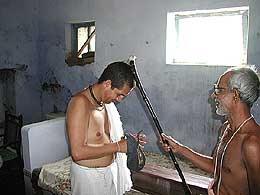
If you are lucky, you will get benediction by Bhaktisiddhanta's walking
stick.
|
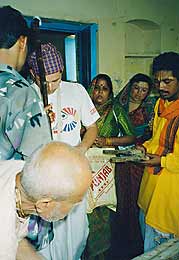 |
Bhaktisiddhanta Sarasvati was the first to bring a number of disciples
that were not born in brahmana families and dressed in western clothes
to Vrindavan and Radhakunda. In Vrindavan even stones were thrown on
them as babaji a caste goswami community protested, and all temples
were closed except Radharaman Goswamis who enthusiastically welcomed
them. Bhaktisiddhanta continued his preaching and planning for further
spreading of Krishna consciousness...
|
 |
...and
since than many things have changed. |
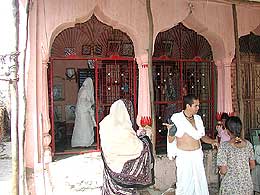 |
21.
Jagannatha Mandir. |
 |
It has became a common practice for devotees performing Radhakunda
parikrama and Govardhana parikrama to stop here and take darsan of beautiful
Deities of Lord Jagannatha, Baladeva and Subhadra.
|
 |
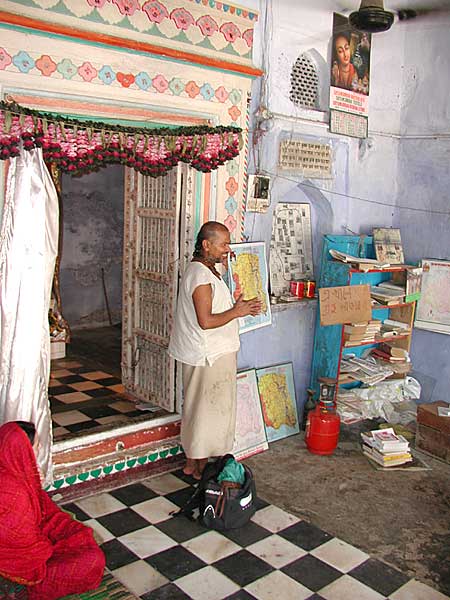
Friendly
pujari is making maps of Radhakunda and Vraja-mandala... |
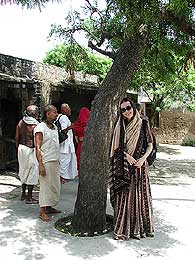 |
There
are signs of Visnu on the tree trunk: cakra, lotus, conshell and club. |
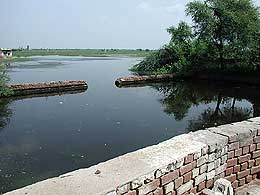 |
22.
Lalitakund
Surrounding Radhakunda and Syamakunda there are the kundas of the eight
main gopi assistants of Srimati Radharani and Krishna. |
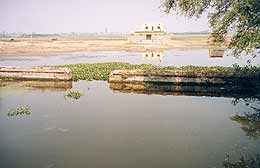 |
Lalitakunda is the only one manifested
today. |
 |
Samadhis
next to Lalitakund. |
 |
Entrance
leading to bhajan-kutir of Jiva Goswami. |
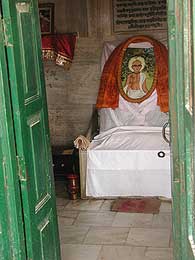 |
23. Bhajan kutir of Srila Jiva Goswami
It is the place where he liked to stay while being on Radhakunda.
Even though Raghunatha dasa Goswami was the inspiration and spiritual
force behind the excavation of Radhakunda, it was Srila Jiva Goswami
who actually purchased the land, oversaw the excavation and managed
the work. He also made sure that Raghunatha was properly taken care
of because, being so deeply absorbed in the feelings of separation from
Radha and Krsna, he had practically no perception of worldly affairs.
|
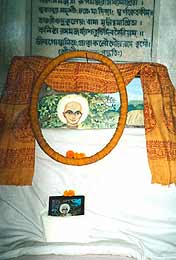 |
Srila Jiva Goswami arrived to
Vrindavan in 1535 and under expert guidance of Rupa and Sanatana Goswami
became brilliant scholar, compiling 400 000 sanskrit verses glorifying
the teachings of Lord Caitanya. Jiva Goswami is known as the India's greatest
philosopher of all times and his Sat-sandarbha to be the penultimate in
all philosophical understanding. |
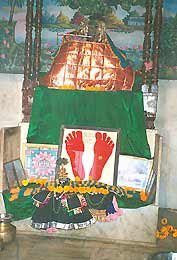 |
Deities in bhajan-kutir of Srila
Jiva Goswami and footprint of Sri Caitanya Mahaprabhu. |
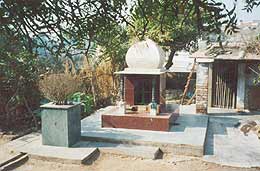 |
28. Madhavendra Puri Baithak
Madhavendra Puri, a great saint who came shortly before the appearance
of Lord Caitanya, used to sit in this place. |
 |
29.
Gopi-kupa is the well originally used by gopis... |
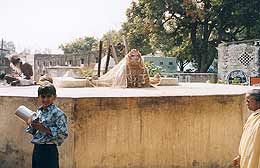 |
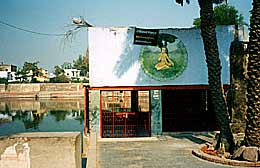
...and rebuilt by Raghunatha
dasa Goswami. Here the tongue of Govardhana was found. |
 |
33. Tamala-tala
(Mahaprabhu-baithak)
In this place on the banks of Syamakunda Sri Caitanya Mahaprabhu used
to sit during His visit. We can find it on heightened area near a tree.
|
 |
The
original tamala tree is not here any more... |
 |
...
but on the right side of baithak there is small offshoot tamala already
growing. |
 |
Sri
Caitanya traveled Vraja asking people about Radhakunda and Syamakunda... |
 |
...Than
He came here and upon hearing the name of the village - Aristagram - Sri
Caitanya became ecstatic. To Him it was obvious that the sacred lakes
must be somewhere nearby. But nobody knew exactly where... |
 |
...After
while He discovered two rice fields on the side of the jungle. One was
called Gauri (golden) and the other Kali (black) and two small ponds... |
 |
...He
took bath in them and announced to His devotees that those are the places
of Radha and Krisna's most intimate pastimes. |
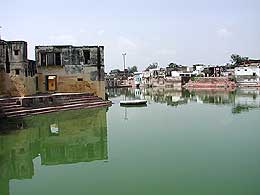 |
Sight
of Syamakunda from Caitanya-baithak. |
 |
34. Pasa-khela-ghat
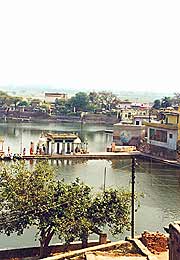
Gopis were ashamed being defeated in many water sports and games by
Krsna and therefore challenged Him to a game of pasa (dice).
Thus Krsna lost His precious Kaustubha gem and had to cheat on the next
throw to win Radharani's embrace...
|
 |
37.
Sangam (Ratna-vedi)
is a meeting place of both sacred lakes. Here Radha and Krsna in the
form of the waters of Syamakunda and Radhakunda embrace eternally... |
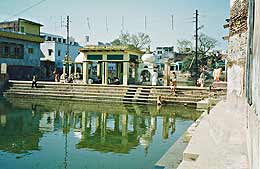 |
...If one looks closely one can see small slits in the stone steps
below white Carana-cinha that allows the waters of the two sacred kundas
to mix together.
Carana-cinha (36.) is a shrine of Radha and Krisna's
lotus feet.
|
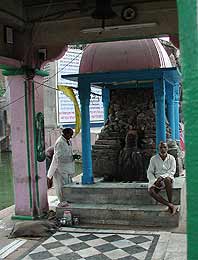 |
38.
Giriraja Maharaja Mandira
At the sangam the large number of Govardhana silas create mini-mountain
of Giriraja. |
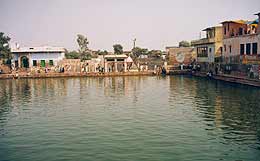 |
It
was here, next to white house, where Bhaktisiddhanta Sarasvati told Srila
Prabhupada: "If you ever get money, print books." |
 |
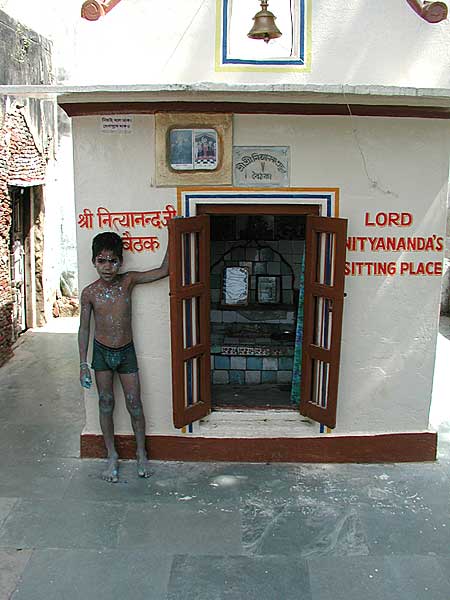
41.
Nityananda Baithak
Lord Nityanada in the mood of Balarama traveled around Vrindavan looking
for His younger brother Krsna. Wondering around Govardhan Hill and calling
out the name of Kanhaiya (Krsna) He must have looked to everybody around
as completely mad avadhuta... |
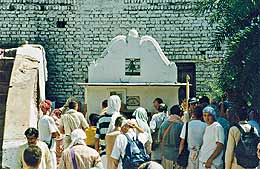 |
...But right here at this spot,
celestial voice told Him, that His brother had now appeared in Navadvipa.
Lord Nityananda immediately got up and set out to Bengal. |
 |
His
baithak was just painted by small Braja-vasi (who might been as bluish
as Krsna Himself at the end of the day, if he had enough paint). |
 |
Inside
of baithak. |
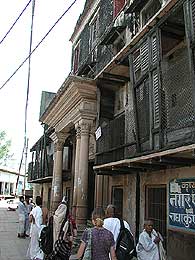 |
Many
buildings at Radhakunda are from times of Raghunatha dasa Goswami, but
people continue to construct new ones even today... |
 |
...and
Radhakunda is thus becoming quite busy place. |
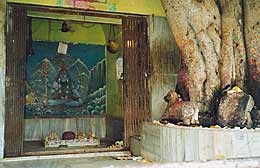 |
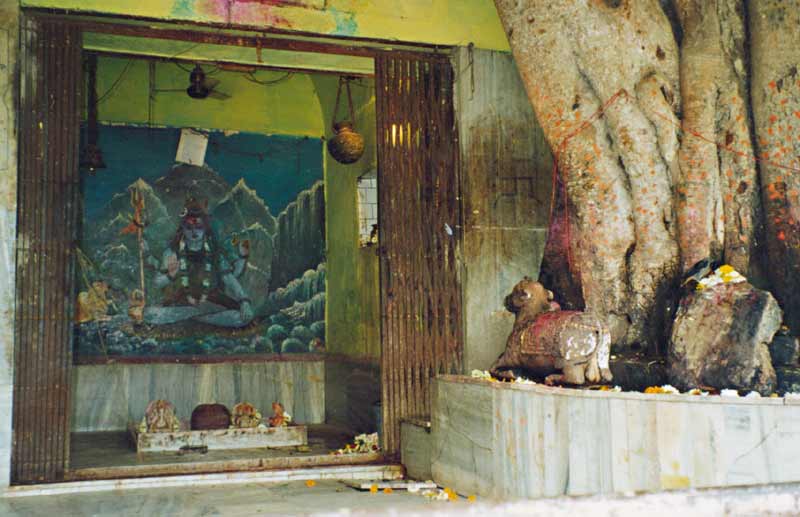
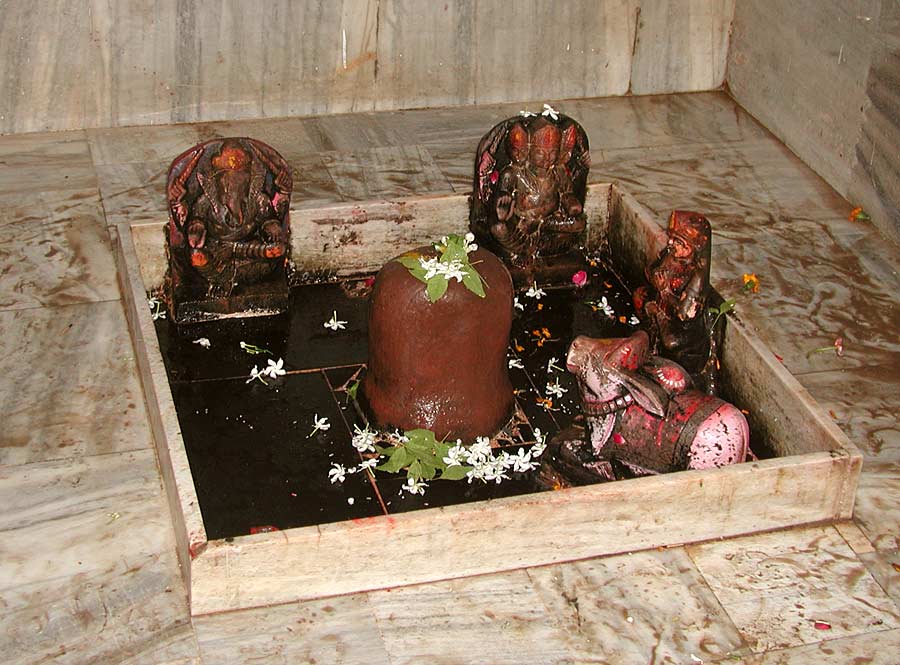
Deity of Siva protects holy places
from different sides and Radhakunda is not an exception... |
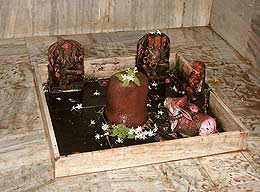 |
...Sri Kundeswara Mahadeva protects
Radhakunda from unqualified people. Altogether there are four Siva Deities
on four sides. |
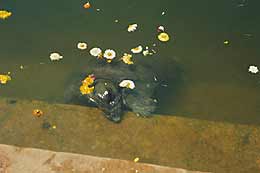 |
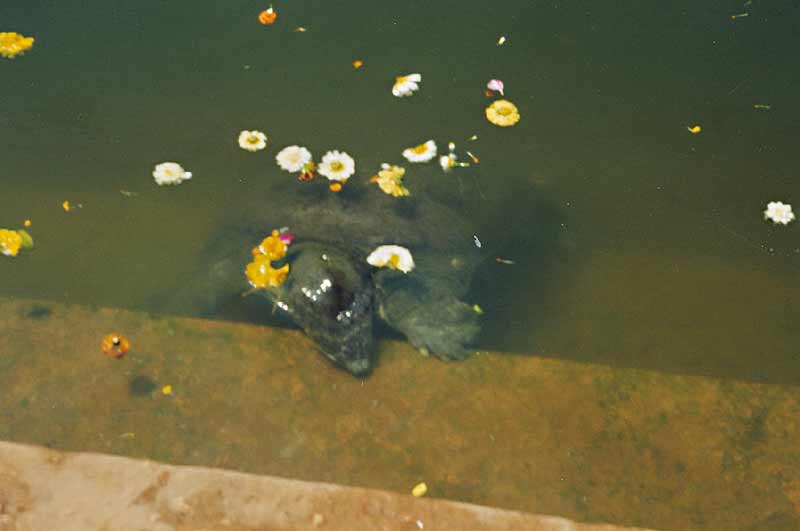
Big tortoises live in Radhakunda. |
 |
Parikram
around Radhakunda is sometimes made in such a way that people carry a
vessel of milk with small hole in it allowing the milk to drop, thus leaving
"milky way" on the ground. |
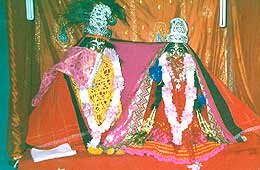 |
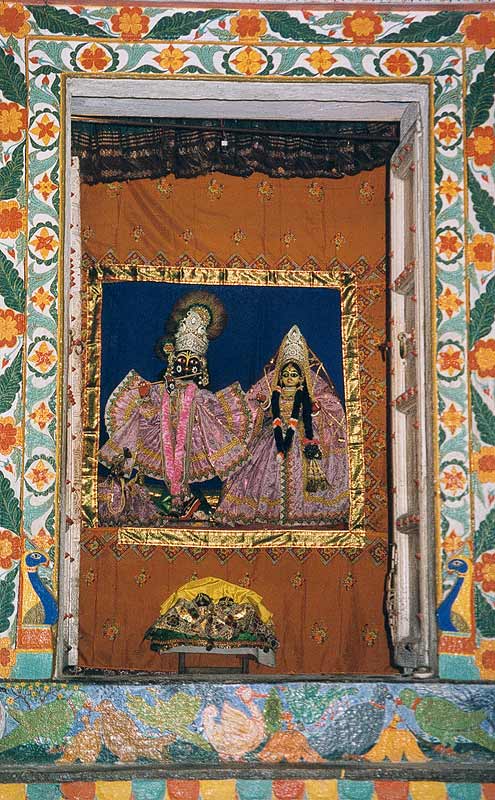
In 1670 many Deities
were transferred from Vrindavana to Jaipur, because it was never conquered
by Muslim kings... |
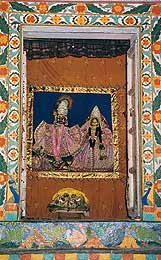 |
First stop was Radhakunda and
in honor of Lord's visit small pratibhu-murtis (expanded forms
nondifferent from the original ones) were installed and their worship
continues until today. |
 |
Small replicas of the Vrindavana
Temples were also built and residents of Radhakunda can visit all main
temples of Vrindavana without leaving Radhakunda. |
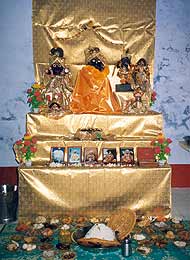 |
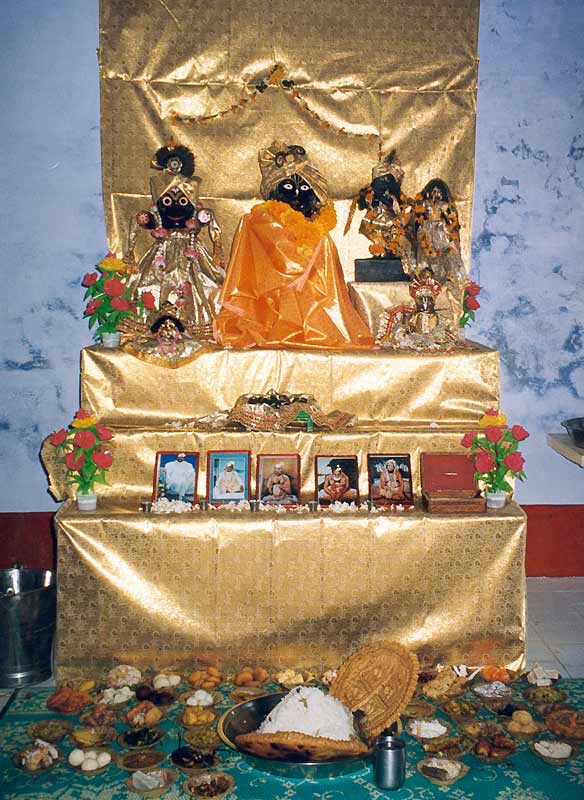
The worship of local Deities continues
for centuries. |
 |
"May very fragrant Radhakunda, on the shore of which, in a pleasant
courtyard Queen Radha and Her friends sweetly joke with Lord Krishna,
the moon of Vraja, be my shelter."
(Raghunatha dasa Goswami)
|
 |
"May very fragrant Radhakunda, where the passionate divine couple daily
plays with Their passionate friends in the charming lotus scented water,
be my shelter."
(Raghunatha dasa Goswami)
|